

JOHN KILEY

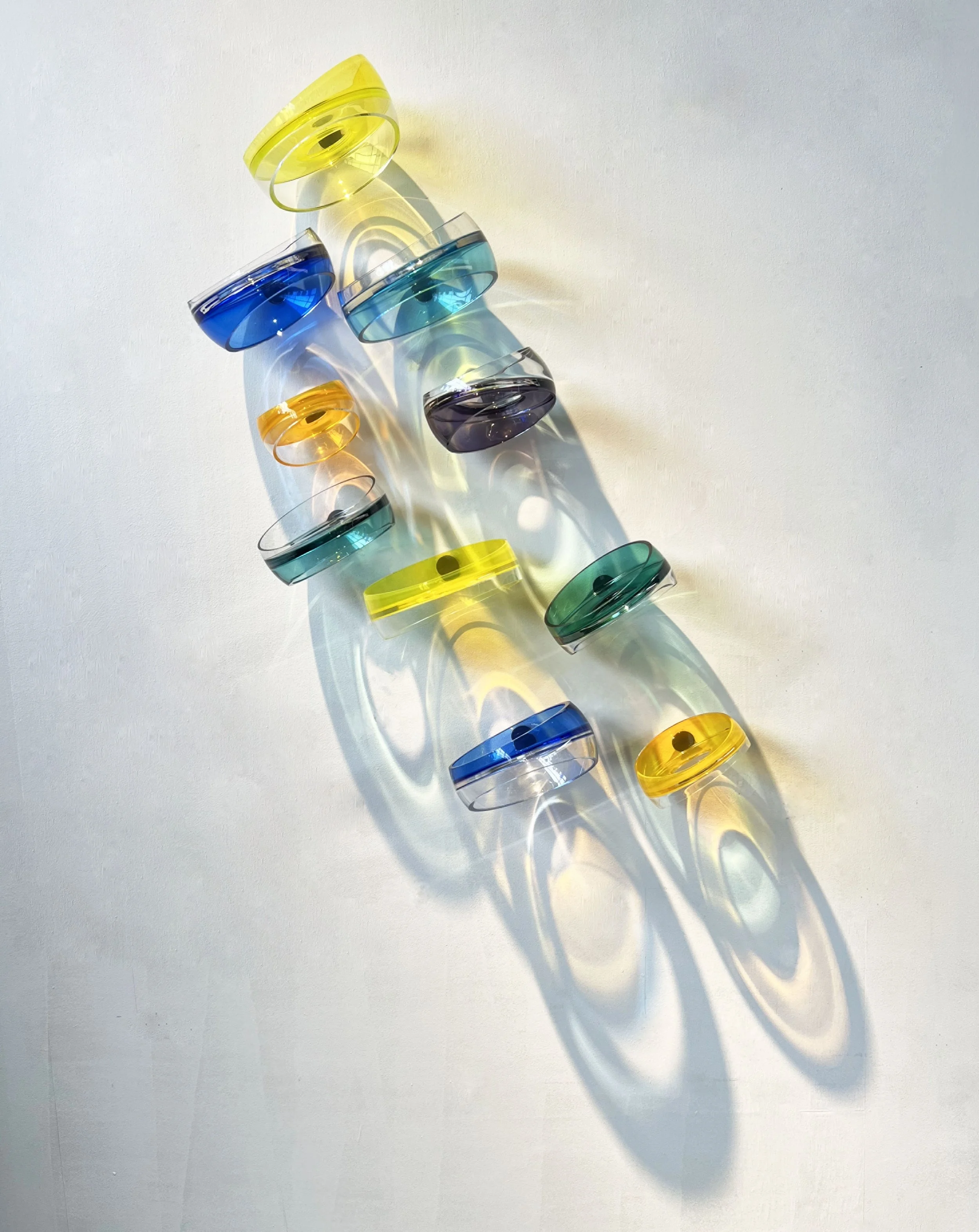
John Kiley constructs his pieces in separate sections then focuses on how the sections fuse together and how the membranes that connect them can be passageways to enhanced visual experience. Between the sphere’s soft roundness and the cleavage’s hard edges, light revels in infinite motion. Sightlines open and close through lens-like holes and shift with the subtle movement of the viewer’s gaze. By deconstructing the form and externalizing its inner parts, Kiley challenges the traditional view of beauty as that which is pristine and complete. John Kiley not only questions which is more beautiful—the whole or its parts, the inside or the outside, negative or positive space, the light, the shadow, or the reflection—but posits that it is the interaction of all of these



Horizons – Aesthetic Chaos Theory
The premise of Chaos Theory is that one miniscule difference at the beginning of otherwise identical dynamical systems, radically changes the outcome. It also changes the ability to reliably predict an outcome, which is why weather is notoriously difficult to forecast more than about week out. The end of the reliable timeline for predicting an outcome is known as the Horizon.
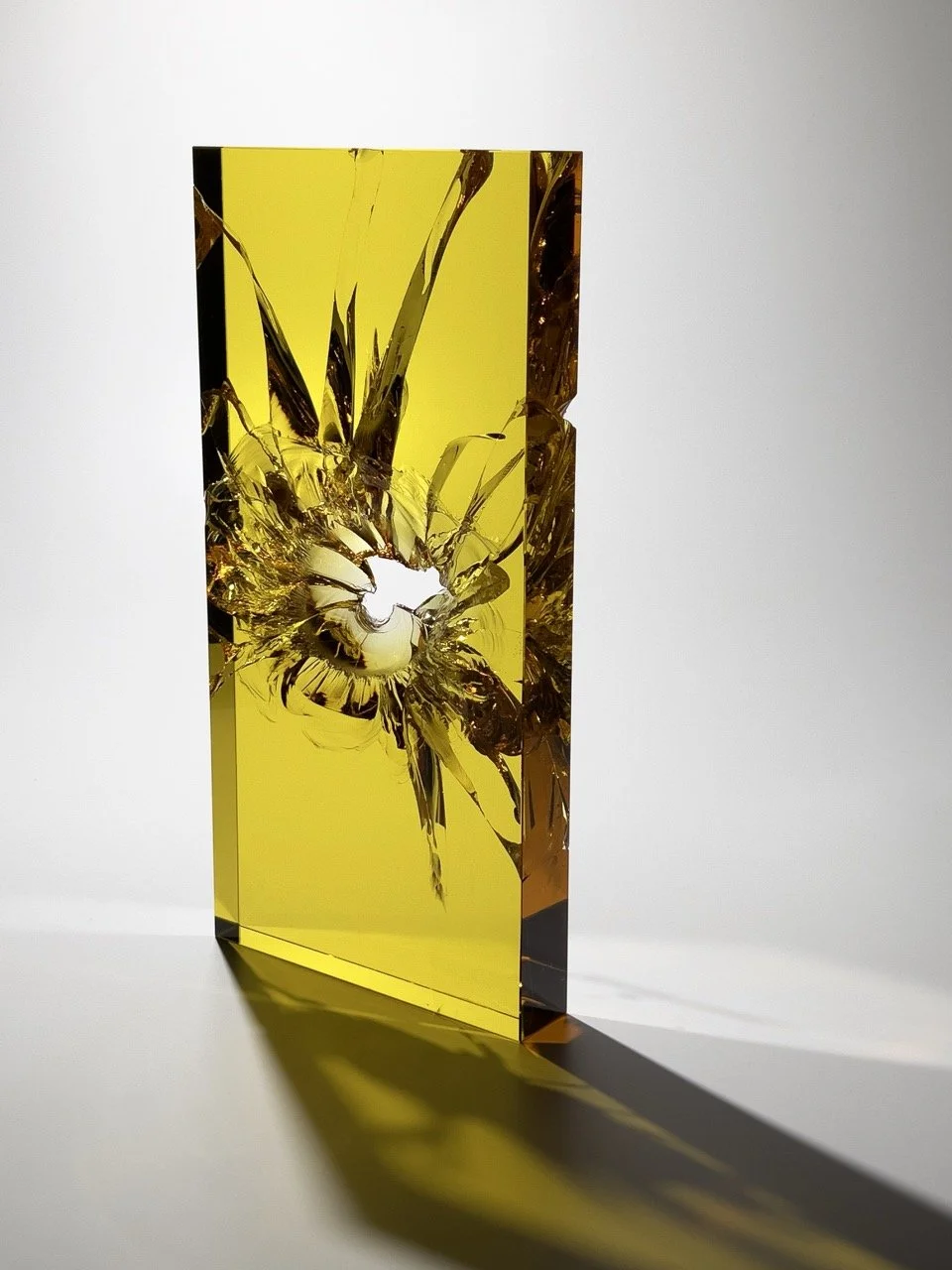
I began developing this new body of work (called Horizons) five years ago, following several years focused on my Fractographs. During that time, I spent countless hours reconstructing broken glass rectangles and studying the ways glass fractures, not scientifically, but aesthetically. It’s important to note however, that in glass, one cannot exactly replicate fractures. Each Fractogaph is as unique as a fingerprint. Chaos Theory aside, it may physically be impossible to identically break glass the same way twice, due to the random atomic structure of the material.
Working on Fractographs, inspired me to consider more formal sculptural compositions, related to fracture patterns but reduced to even simpler forms.
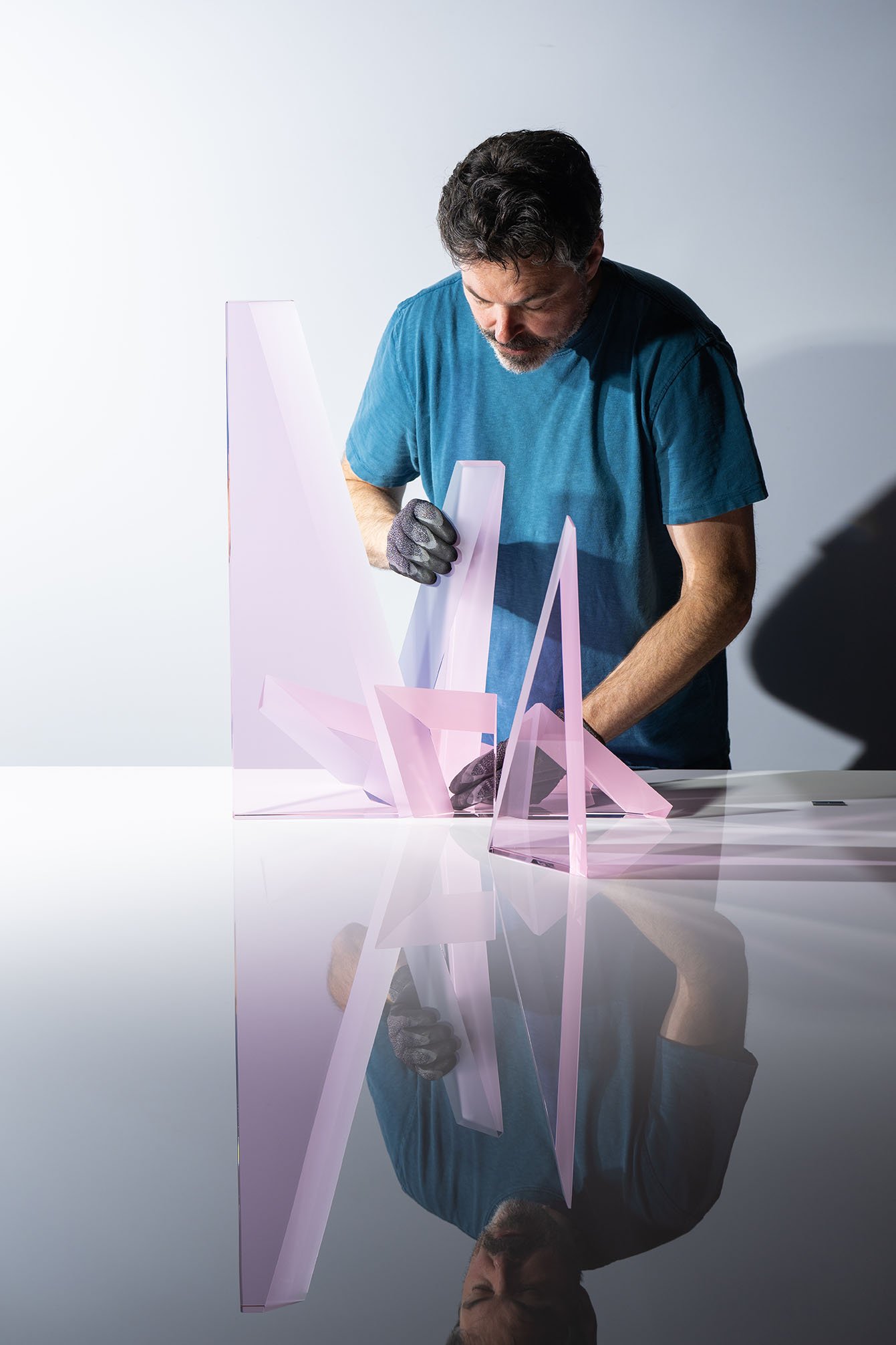
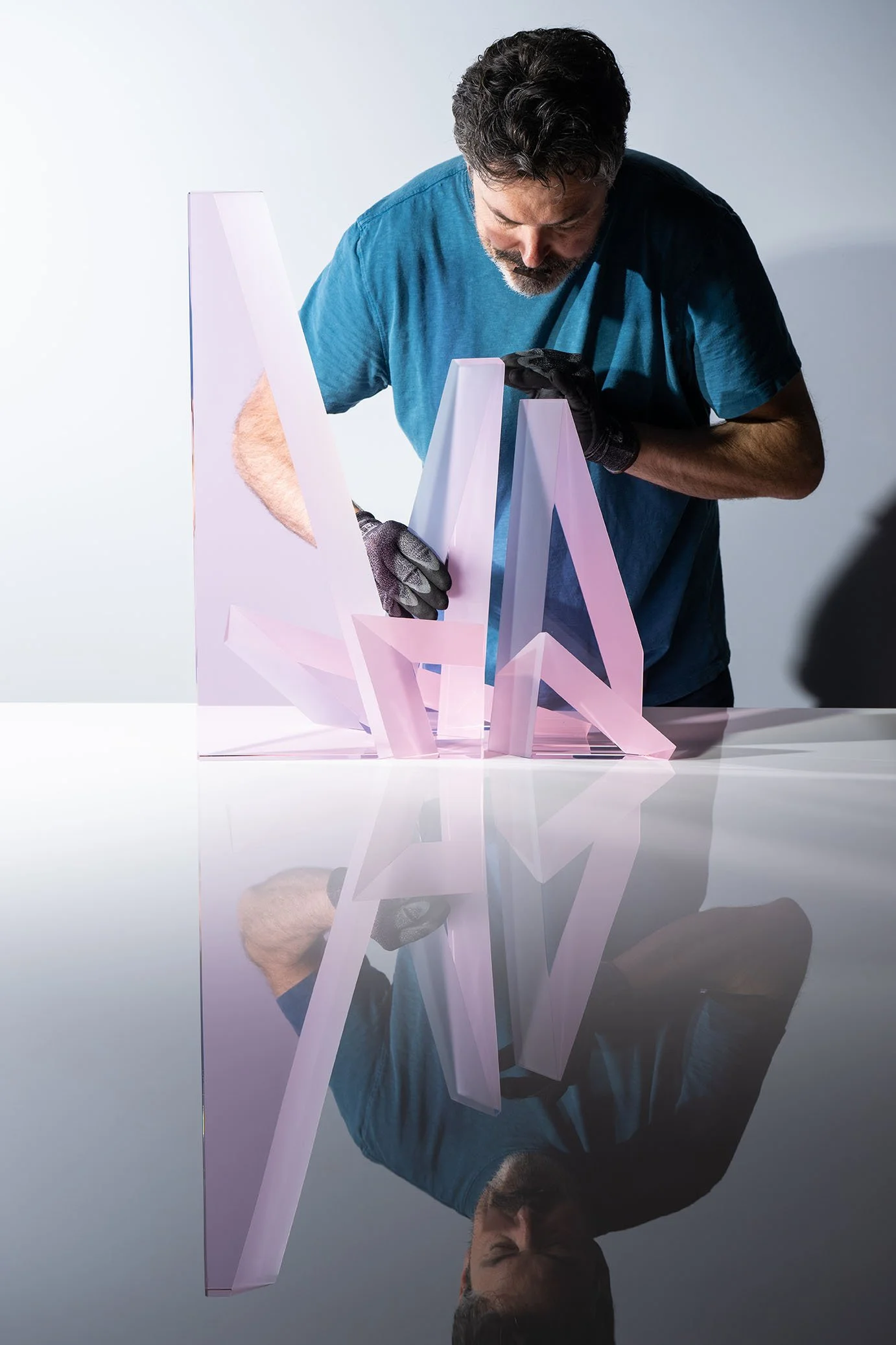
Like the Fractographs, Each Horizon sculpture begins with a mass of optic glass that is ground and polished into a rectangle. For the Horizons, on this pristine surface, I do a simple abstract line drawing, loosely referencing fracture lines seen in broken glass. After the shapes are drawn and angles determined, the rectangle is cut into sections. The rough-cut surfaces are then smoothed and finished by hand to achieve either a satin or polished finish.
Quisque iaculis facilisis lacinia. Mauris euismod pellentesque tellus sit amet mollis.